
Turning Pledges into Action at COP30
- Our society is operating beyond most of the planet’s ecological limits, and COP30 marks a pivotal moment for nations to turn climate pledges into concrete actions.
- Beyond decarbonisation, equal focus must be placed on protecting nature and biodiversity to protect long term profits. Financial institutions should work towards greening their portfolios to align capital flows toward sustainable, nature-positive outcomes.
Humanity has long outpaced the planet’s ability to regenerate its natural systems. From rising carbon emissions to the loss of biodiversity and the degradation of ecosystems, we are now operating beyond seven of nine of the Earth’s planetary boundaries. These overshoots threaten not only the stability of our earth systems but also the long-term prosperity of our global economy.
Fig.1: COP 30 at Belem, Brazil
As the world convenes in Belém, Brazil for COP30, a decade since the signing of the Paris Agreement, nations find themselves at the halfway mark toward the 2030 climate targets. We are now moving into an age of implementation, where pledges evolve into pathways, and commitments become concrete climate action. The conference’s focus on climate mitigation, adaptation, nature, and financing reflects the urgent need to address interconnected crises that shape our planet’s stability.
At COP30, the first Global Stocktake since the 2015 Paris Agreement is set to take place, marking a critical moment to assess collective progress on climate action. This process involves reviewing countries’ Nationally Determined Contributions (NDCs) to evaluate how close or far the world remains from meeting its climate goals. Yet only 109 countries have submitted their updated NDCs, and just 13 did so on time by February 2025.
Despite these gaps, the years since Paris have seen measurable progress in curbing the growth of greenhouse gas emissions. Between 2005 and 2014, global emissions increased by an average of 1.7% annually, whereas from 2015 to 2024, this rate slowed to 0.3% per year. As a result, projected warming by 2100 has declined from around 4°C to approximately 2.8°C above pre-industrial levels based on current policies. While this represents a significant improvement since the Paris Agreement, the world remains well beyond the threshold for climate safety, underscoring the urgent need for accelerated action in the decade ahead.
While climate negotiations at COP30 continue to take place primarily at the national level, corporations play a pivotal role in turning these ambitions into tangible outcomes. In recent years, the private sector has intensified efforts toward decarbonisation, seeking to mitigate both environmental and financial risks.
As corporate climate reporting increasingly focuses on financial materiality, it is equally important to recognise nature as the foundation of all economic activity. It is reported that half of the world’s GDP is moderately or highly dependent on nature, underscoring the urgent need to address nature related dependencies to achieve long term economic success. One of COP30’s key discussion points is the interconnection between climate and nature, and understanding these two dimensions as two sides of the same coin will be essential to building more holistic and resilient strategies. The complexity and interconnectedness of Earth’s systems mean that climate and nature cannot be addressed in silos.
Encouragingly, frameworks and tools for nature-related reporting have expanded in recent years, including the Taskforce on Nature-related Financial Disclosures (TNFD), WWF’s Water Risk Filter, Integrated Biodiversity Assessment Tool (IBAT), and Exploring Natural Capital Opportunities, Risks and Exposure (ENCORE). These initiatives provide companies with the means to assess both their impacts on nature and their dependencies on natural systems, enabling them to build resilience while contributing to planetary health. For financial institutions, this responsibility extends beyond their direct operations to the activities they finance. Considering financed emissions within investment portfolios and actively transitioning to support a green economy allows institutions to align capital flows with sustainable outcomes, helping to drive systemic change across sectors and move the world closer to achieving international climate and nature goals. By doing so, financial institution builds climate and nature resilient portfolios which will better withstand ESG risks.
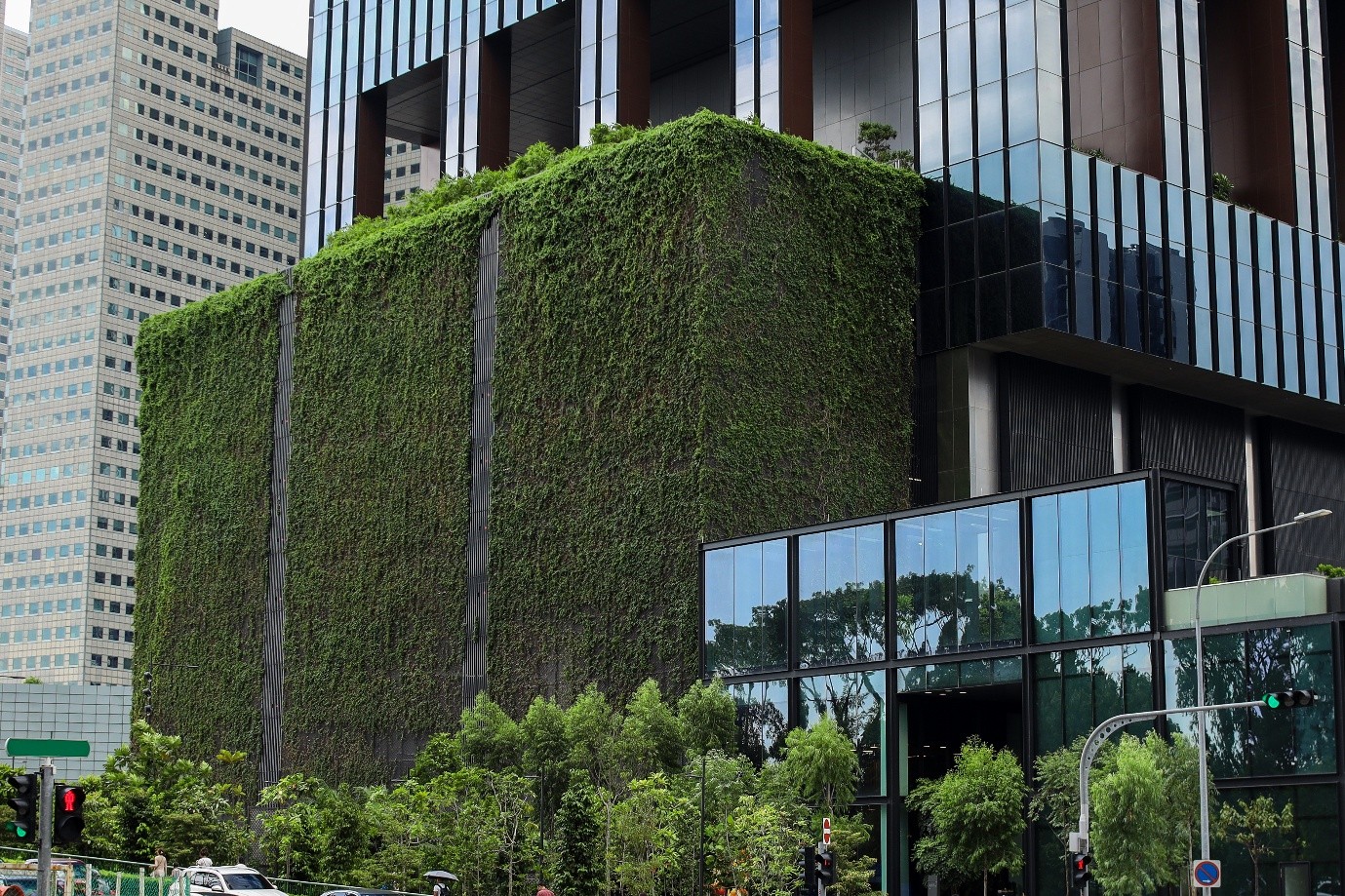
Fig. 2: Green walls as adaptation and mitigation measure
Zooming in on Singapore, we were among the 13 nations that submitted their updated NDCs on time in February this year. As a global financial hub, Singapore has leveraged blended finance as a mechanism to advance regional climate action. At COP28 in 2023, former Senior Minister Teo Chee Hean announced the launch of the Financing Asia’s Transition Partnership (FAST-P) by the Monetary Authority of Singapore (MAS). Building on this, at COP29, Minister for Sustainability and the Environment Grace Fu announced that the Singapore Government would commit up to US$500 million in concessional funding to support the initiative. FAST-P aims to mobilise international public, private, and philanthropic partners to finance Asia’s decarbonisation and climate resilience, narrowing the financing gap and accelerating the region’s transition toward a low-carbon future.
As investors, we value companies that proactively identify and manage ESG risks associated with their operations, implementing mitigation and adaptation measures to strengthen resilience and capture emerging opportunities. We also favour financial institutions that reorient their portfolios away from businesses that are not transitioning toward a green economy, thereby safeguarding long-term value and protecting invested capital. As COP30 unfolds in the coming days, companies should remain attuned to the evolving global landscape and actively align their strategies with international climate and nature goals. This ensures that their business models remain both resilient and future-ready, rather than stranded in a rapidly changing world.
The Blueprint
With the ever-changing landscape around us, it can get overwhelming to stay up-to-date. The Blueprint highlights pertinent global Environmental, Social, and Governance (ESG) issues and their importance to investors and the wider community. We look forward to engaging in discussions about the interconnections between climate, nature, and social outcomes that impact our investments and our futures.
Important Information
This material is provided by Phillip Capital Management (S) Ltd (“PCM”) for general information only and does not constitute a recommendation, an offer to sell, or a solicitation of any offer to invest in any of the exchange-traded fund (“ETF”) or the unit trust (“Products”) mentioned herein. It does not have any regard to your specific investment objectives, financial situation and any of your particular needs.
The information provided herein may be obtained or compiled from public and/or third party sources that PCM has no reason to believe are unreliable. Any opinion or view herein is an expression of belief of the individual author or the indicated source (as applicable) only. PCM makes no representation or warranty that such information is accurate, complete, verified or should be relied upon as such. The information does not constitute, and should not be used as a substitute for tax, legal or investment advice.
The information herein are not for any person in any jurisdiction or country where such distribution or availability for use would contravene any applicable law or regulation or would subject PCM to any registration or licensing requirement in such jurisdiction or country. The Products is not offered to U.S. Persons. PhillipCapital Group of Companies, including PCM, their affiliates and/or their officers, directors and/or employees may own or have positions in the Products. This advertisement has not been reviewed by the Monetary Authority of Singapore.
