
Pricing Nature
- COP17 ended with most nature goals off track and finance the main sticking point. Far more money still flows to activities that harm nature than to protecting it.
- Carbon credits are one way to channel private capital to nature, but their design limits what they can deliver for biodiversity. Companies that understand how they depend on and affect nature will be better placed.
Nature quietly does work for the economy. Ecosystems provide services that people and companies rely on every day: forests and wetlands regulate water and rainfall, soils and pollinators support harvests, mangroves buffer coasts from storms, and healthy habitats supply timber, fish and medicines. These are known as ecosystem services, and every company draws on them, whether they appear on its balance sheet. The difficulty is that most are free to use and so are not priced, which means markets send no signal when they run short. As Singapore’s Ambassador for Climate Action Ravi Menon put it in May, “Most of nature’s value is not priced. This is the foundational market failure.” When a cost falls on others rather than on whoever causes it, economists call it a negative externality, and capital tends to follow what is priced rather than what is protected.
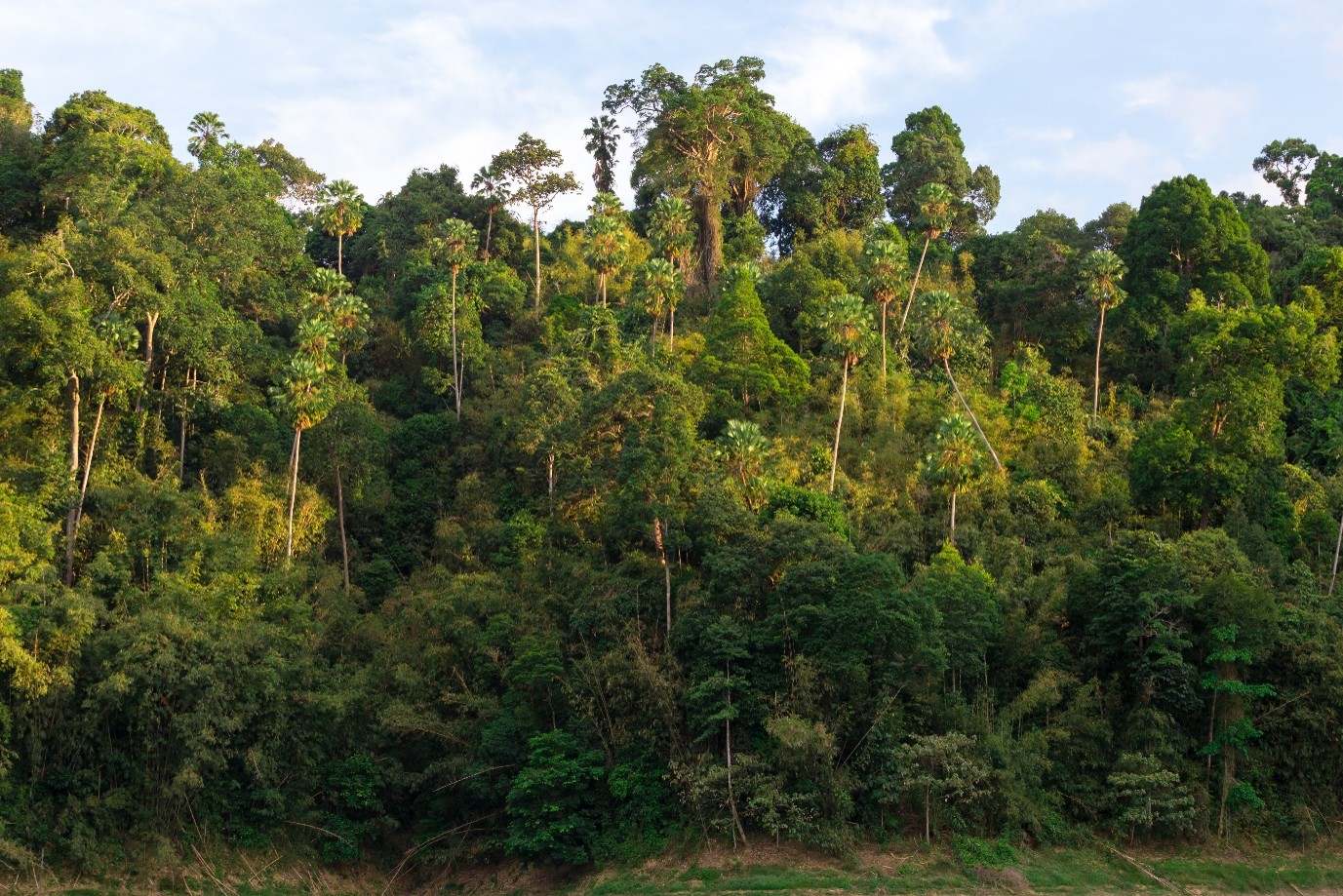
Fig.1: Tropical Rainforest
The numbers show it. UNEP’s State of Finance for Nature 2026 estimates that US$7.3 trillion flowed to activities that harm nature in 2023. About US$4.9 trillion came from private sources, mainly utilities, industrials, energy and basic materials, and US$2.4 trillion from public subsidies that harm the environment, such as those for fossil fuels and agriculture. Investment in nature-based solutions, which means actions that protect or restore ecosystems, was only US$220 billion, close to 90 per cent of it public money. That is about US$30 spent harming nature for every US$1 spent protecting it. Nature-based investment would need to rise 2.5 times, to US$571 billion a year, by 2030.
That gap was the backdrop to the UN biodiversity summit in Yerevan, Armenia, which closed on 31 October. Governments adopted the Yerevan Pathway to speed up delivery of the Kunming-Montreal Global Biodiversity Framework, but a UN review found the world off track on 22 of its 23 targets. If countries only meet their current national goals, about 26 per cent of land and 12 per cent of the sea would be protected by 2030, against a goal of 30 per cent of each.
Finance split the talks. The target of US$20 billion a year in international biodiversity finance for developing countries by 2025 was missed. The EU wanted wealthy emerging economies such as China and Saudi Arabia added to the donor list, the Arab Group opposed it, and the compromise only invites developing countries to signal voluntarily if they wish to be treated as donors. Countries agreed to “accelerate” reform of subsidies that harm nature, the target with the least progress so far. The Cali Fund, which asks companies that profit from genetic data drawn from nature to pay 1 per cent of profits or 0.1 per cent of revenue, has received little more than US$10,000, and its key decisions were deferred to 2028.
With public money short, attention turns to private capital, and carbon markets are the most developed channel. A carbon credit is a tradable certificate for one tonne of carbon dioxide avoided or removed. Nature-based credits come from projects that protect or restore forests, mangroves and peatlands, so a buyer’s payment makes the land worth more standing than cleared. Southeast Asia holds about 30 per cent of the world’s potential for nature-based solutions, and MSCI estimates that nature-based credits could be worth at least US$5 billion in 2030 and up to US$200 billion by 2050. In 2023, more than 36 million nature-based credits worth US$351 million were traded in voluntary markets.
However, carbon markets are built to deliver climate benefits, not biodiversity, and a study in Nature Reviews Biodiversity points to design gaps. Additionality, the requirement to prove that a project goes beyond business as usual, can exclude intact forests that are rich in species but at low risk of being cleared, because they generate fewer credits. Accounting also tracks displaced emissions rather than habitat damaged elsewhere, and a lost species cannot be offset the way a tonne of carbon can. Fast-growing monoculture plantations can earn credits while reducing diversity, and high costs can shut out community-led projects. The authors do not reject carbon markets, but say they will not halt biodiversity loss without regulation and other policies alongside them.
Singapore is both a buyer and a market builder. Companies liable for its carbon tax, set at S$45 per tonne of emissions in 2026 and 2027, can use eligible international credits to offset up to 5 per cent of their taxable emissions. The government has also contracted about 2.2 million tonnes of nature-based credits, worth about S$76 million, from four projects in Peru, Paraguay and Ghana for use between 2026 and 2030 under Article 6 of the Paris Agreement, which lets countries trade emission reductions. In May, Mr Menon proposed a framework for a regional nature-based carbon market built on integrity, demand and supply, including a S$15 million programme to estimate the carbon stored in mangroves, forests and peatlands.
The other lever is disclosure, since investors cannot price what companies do not report. On 22 October the International Sustainability Standards Board (ISSB) published an exposure draft of a practice statement on nature-related disclosures. It is guidance rather than a mandatory standard and builds on the recommendations of the Taskforce on Nature-related Financial Disclosures (TNFD), and it is open for comment until 19 February 2027, though individual jurisdictions could make it mandatory. More than 760 organisations worldwide have committed to TNFD reporting, with Asia-Pacific firms among the most active. In Singapore, City Developments has closed nature-linked sustainability-linked loans of S$400 million in 2024 and S$300 million with DBS this year, earning a discount of a few basis points, and Olam Agri has long valued soil, water and pollination in its accounts.
Taken together, carbon credits and disclosure rules are attempts to put a price on something that has none. They work best as complements. Credits fund protection that would not otherwise happen, disclosure shows which companies depend on or harm nature, and regulation removes the subsidies pulling the other way. Until all three advance, the cost of undervaluing nature will keep falling on ecosystems, communities and future generations rather than on those who cause it.
As investors, we look at nature through double materiality. The first question is how nature affects the company: which operations depend on water, land, raw materials and healthy ecosystems, and whether those sites sit in areas under stress, such as water-scarce or ecologically important locations. The second is how the company affects nature: the land it clears, the water and pollution it releases and the habitat it displaces across its value chain. This applies to every company, not only those in agriculture, forestry or mining. We value companies that identify and disclose these dependencies and impacts. We treat credits as a complement, not a substitute: they carry more weight when they are high in integrity and cover emissions that remain after reductions. Companies that manage nature risk in both directions are better placed to protect long-term value.
The Blueprint
With the ever-changing landscape around us, it can get overwhelming to stay up-to-date. The Blueprint highlights pertinent global Environmental, Social, and Governance (ESG) issues and their importance to investors and the wider community. We look forward to engaging in discussions about the interconnections between climate, nature, and social outcomes that impact our investments and our futures.
Important Information
This material is provided by Phillip Capital Management (S) Ltd (“Phillipfunds”) for general information only and does not constitute a recommendation, an offer to sell, or a solicitation of any offer to invest in any of the exchange-traded fund (“ETF”) or the unit trust (“Products”) mentioned herein. It does not have any regard to your specific investment objectives, financial situation and any of your particular needs.
The information provided herein may be obtained or compiled from public and/or third party sources that Phillipfunds has no reason to believe are unreliable. Any opinion or view herein is an expression of belief of the individual author or the indicated source (as applicable) only. Phillipfunds makes no representation or warranty that such information is accurate, complete, verified or should be relied upon as such. The information does not constitute, and should not be used as a substitute for tax, legal or investment advice.
The information herein are not for any person in any jurisdiction or country where such distribution or availability for use would contravene any applicable law or regulation or would subject Phillipfunds to any registration or licensing requirement in such jurisdiction or country. The Products is not offered to U.S. Persons. PhillipCapital Group of Companies, including Phillipfunds, their affiliates and/or their officers, directors and/or employees may own or have positions in the Products. This advertisement has not been reviewed by the Monetary Authority of Singapore.
